

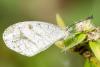


1a https://www.inaturalist.org/observations/286675180
1b. https://www.inaturalist.org/observations/286675179
1a is definitely Pantoporia hordonia.
1b looks to be the same .(very poor picture quality.)
P. hordonia FW submarginal grey band broad and prominent.
https://wingscales.com/media/2400/450-1-c2fd9.jpg
P. sandaka.
Orange submarginal band prominent.
https://blogger.googleusercontent.co...0/DSC_0136.JPG
2.https://www.inaturalist.org/observations/286675147
Melanitis zetinius.
FW very strongly falcate and long tail.
https://yutaka.it-n.jp/sat/40030010.html
Others.
M. leda FW less falcate and HW with short tail.
https://yutaka.it-n.jp/sat/40010001.html
M. phedima. FW much less falcate, costa strongly arched, .
https://yutaka.it-n.jp/sat/40020010.html
3. https://www.inaturalist.org/observations/286501788
Telicota besta male.
FW woth space 2 base orange.
Male brand nearer inner margin of black space.
https://blogger.googleusercontent.co...male_up_01.jpg
Similar.
T. augias.
Very orangey, male bran large and straight.
https://3.bp.blogspot.com/-y3LkExqbZ...ias_male_2.jpg
4.https://www.inaturalist.org/observations/286720677
Borbo cinnara.
FW spots well-spaced.
Spot in space 1b. thick antennal clubs.
https://yutaka.it-n.jp/hes/93060001.html
5. https://www.inaturalist.org/observations/286675178
Very likely Iambrix salsala.
UpF with large white spot.
https://yutaka.it-n.jp/hes/91470001.html
Similar but UpF barely spotted.
https://yutaka.it-n.jp/hes/91480001.html


 Reply With Quote